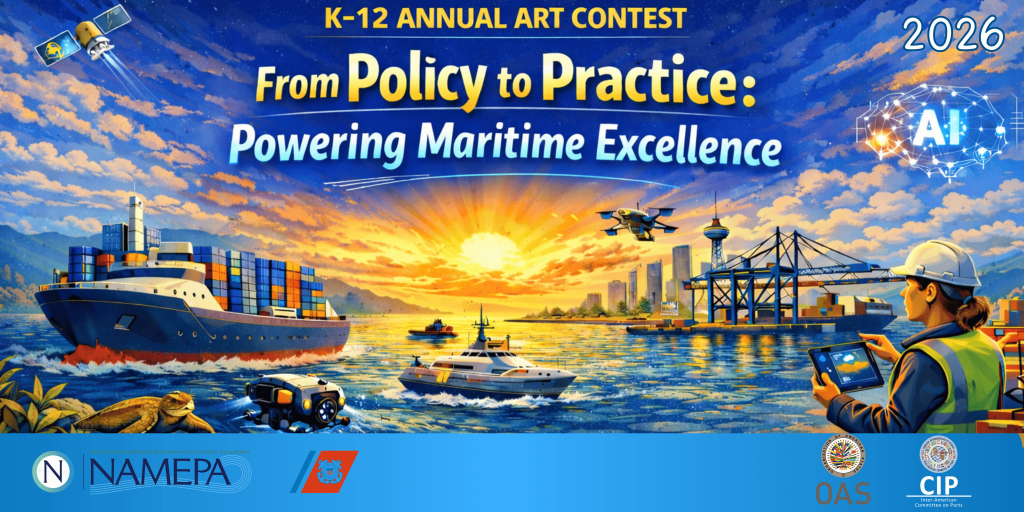
Students in grades K–12 are invited to participate in the annual calendar art contest sponsored by the North American Marine Environment Protection Association (NAMEPA), the United States Coast Guard (USCG), and the Inter-American Committee on Ports of the Organization of American States (CIP-OAS). The theme for this year’s contest is “From Policy to Practice: Powering Maritime Excellence,” reflecting the International Maritime Organization’s World Maritime Day themes for both 2026 and 2027. This theme highlights the importance of turning global maritime policies and regulations into real-world actions that improve safety, efficiency, innovation, and environmental protection across the maritime industry. The contest emphasizes the IMO’s mission of turning global maritime regulations into real, enforceable actions that guide day-to-day operations across the maritime industry.
Submissions will be accepted from students across the Americas (North America, Central America, South America, and the Caribbean). Students living outside the Americas are welcome to apply, provided they have one or more parents on active duty with the U. S. Coast Guard.
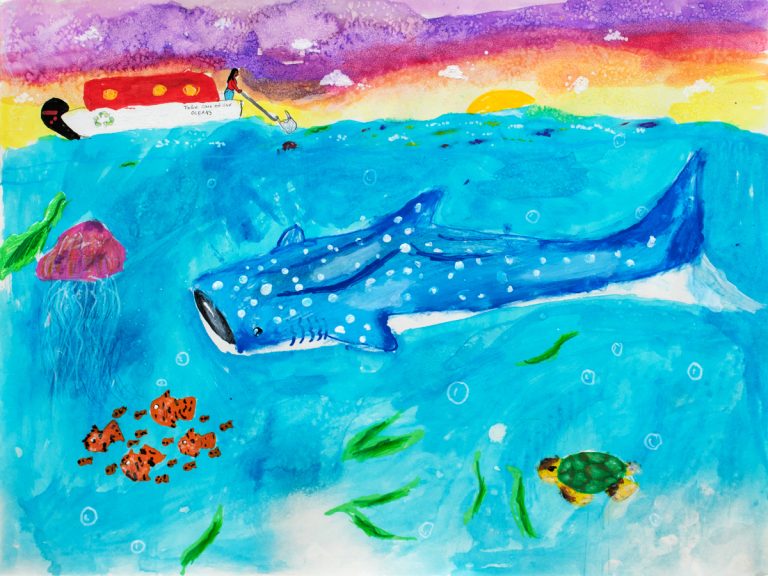
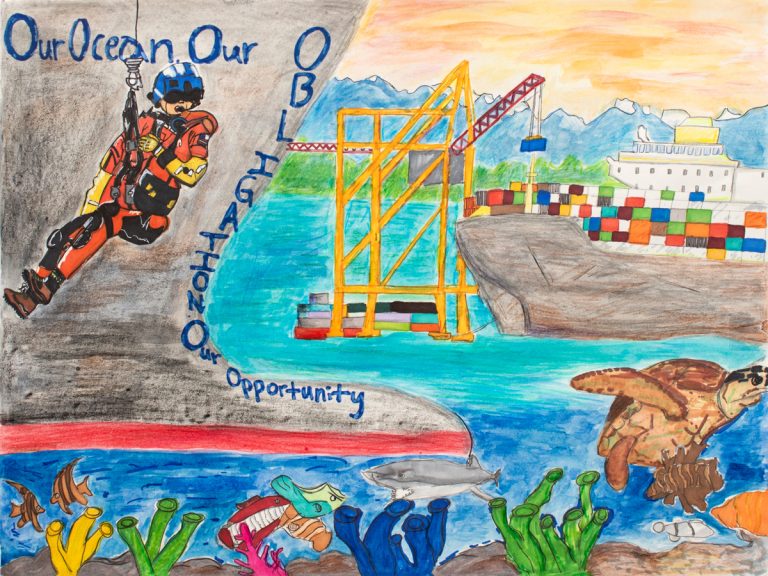
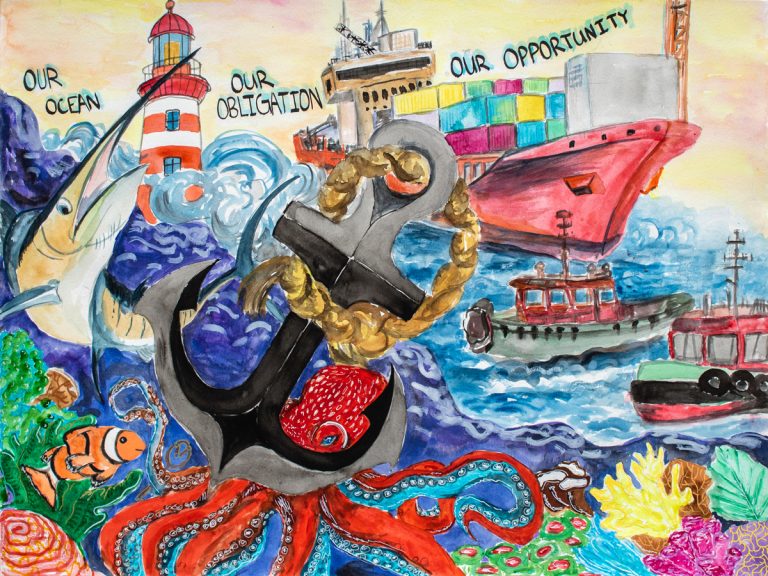
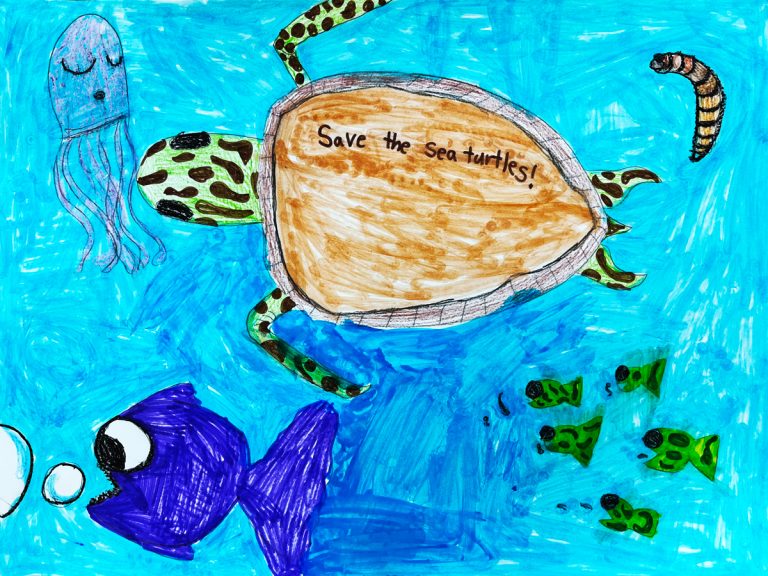
Students are asked to submit an original poster that shows how regulations, ideas, and actions in the maritime industry help protect the ocean and support a safe maritime industry, and protect the marine environment.
Students are asked their artwork address one or more of the topics below:
- From Policy to Practice – Rules in Action:
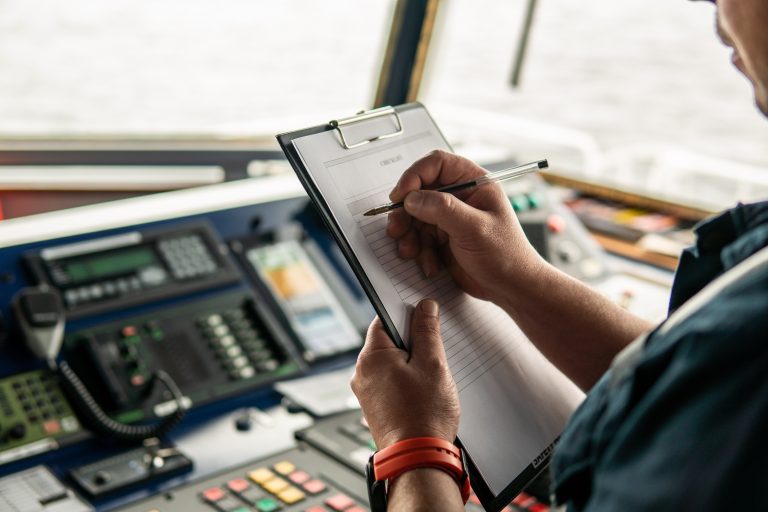
 Illustrate how rules developed by the International Maritime Organization (IMO) are put into action every day to protect the ocean and help ships and ports work safely. You might draw ships following safe paths, crews doing their jobs carefully or people working together to keep the ocean safe. Your artwork may also show how important maritime rules—such as preventing pollution (MARPOL), keeping people safe at sea (Safety of Life At Sea- SOLAS which derived from the Titanic tragedy), and making sure crews are well trained (International Convention on Standards of Training, Certification and Watchkeeping- STCW)—help guide real-life decisions on ships and in ports around the world.
 Illustrate how rules developed by the International Maritime Organization (IMO) are put into action every day to protect the ocean and help ships and ports work safely. You might draw ships following safe paths, crews doing their jobs carefully or people working together to keep the ocean safe. Your artwork may also show how important maritime rules—such as preventing pollution (MARPOL), keeping people safe at sea (Safety of Life At Sea- SOLAS which derived from the Titanic tragedy), and making sure crews are well trained (International Convention on Standards of Training, Certification and Watchkeeping- STCW)—help guide real-life decisions on ships and in ports around the world.
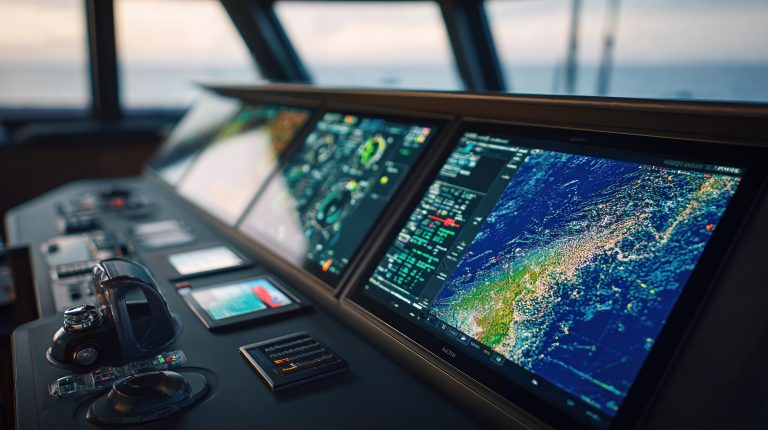
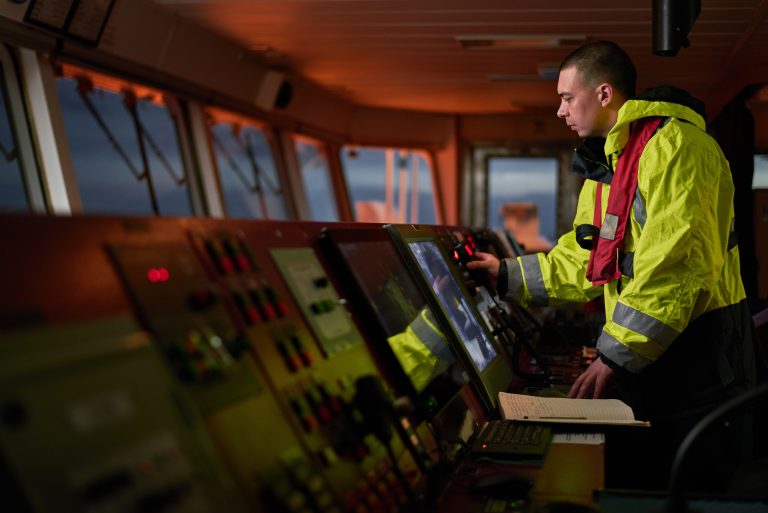
- Technology – Tools That Help Ships: Create artwork that shows how new technology and tools help the maritime industry follow international rules and protect the ocean. Artwork can include navigation tools such as electronic charts or GPS that help ships travel safely; safety equipment such as life jackets or hard hats; satellite communications to connect the ship to the shore; or creative ideas that help protect the ocean and keep ports clean, such as waste and recycling systems that keep trash out of the water.
 Technology – Tools That Help Ships: Create artwork that shows how new technology and tools help the maritime industry follow international rules and protect the ocean. Artwork can include navigation tools such as electronic charts or GPS that help ships travel safely; safety equipment such as life jackets or hard hats; satellite communications to connect the ship to the shore; or creative ideas that help protect the ocean and keep ports clean, such as waste and recycling systems that keep trash out of the water.
- Innovation – New Ideas for the Future of Shipping: Imagine new ideas that make shipping cleaner, safer, and smarter. You could draw new ship designs, new ways ships save energy, or creative tools that help reduce pollution. Artwork might show ships using smart designs, special technology that protects marine animals, or creative ideas that help ships work safely while caring for the ocean and the life in it.
 Innovation – New Ideas for the Future of Shipping: Imagine new ideas that make shipping cleaner, safer, and smarter. You could draw new ship designs, new ways ships save energy, or creative tools that help reduce pollution. Artwork might show ships using smart designs, special technology that protects marine animals, or creative ideas that help ships work safely while caring for the ocean and the life in it.
- Ports and Learning Onboard: Show what happens at ports or on ships when people learn, train, and work together. This could include classrooms, training simulators, improving communications, or crews learning new skills to do their jobs safely and responsibly.
Twelve entries (six from grades K–5 and six from grades 6–12) will be selected as finalists based on the following criteria:
- Interpretation and clarity of the theme
- Creativity and originality
- Quality of artistic composition
- Overall impression of the artwork
The winning artwork will be featured on NAMEPA, USCG, and OAS-CIP websites. Finalists will receive a certificate and a calendar with the artwork from all 12 winners. Two grand-prize winning artists (one from each of the grade brackets) will receive, in addition to the certificate and calendar, a $100 cash prize and a USCG prize package. Full rules are posted below.
Who: Students in grades K–12.
What: Each entry must be a two-dimensional, original piece of artwork done on white poster board with dimensions of 24” x 18” or 32” x 24” (61 cm x 46 cm or 81 cm x 61 cm) in the landscape orientation. Any art medium may be used; however, computer graphics will not be accepted. Bright colors should be used because they are best for reprinting. Any artwork that includes copyrighted or trademarked product names will be disqualified. The student’s name or school should not appear on the front or back of the artwork. If selected, the physical artwork will need to be mailed to NAMEPA’s office to be photographed for the calendar.
If you have additional questions about the contest, please contact m.reilly@namepa.net
United States Coast Guard
The U.S. Coast Guard is one of the six armed forces of the United States and the only military organization within the Department of Homeland Security. Since 1790 the Coast Guard has safeguarded our maritime and environmental interests around the world. The Coast Guard is an adaptable, responsive military force of maritime professionals whose broad legal authorities, capable assets, geographic diversity, and expansive partnerships provide a persistent presence in rivers, ports, littoral regions and on the high seas. Coast Guard presence and impact is local, regional, national, and international. These attributes make the Coast Guard a unique instrument of maritime safety, security, and environmental stewardship. For more information, visit www.uscg.mil.
CIP-OAS

The Inter-American Committee on Ports (CIP) of the Organization of American States (OAS) brings together the National Port Authorities of all 34 member States of the OAS and facilitates the development of competitive, sustainable, secure, and inclusive ports in the Hemisphere by actively facilitating cooperation between the highest governmental level and the private sector. CIP collaborates with its over 100 members, associate members and strategic partners to promote the protection of the marine environment and sustainable port management practices, competitive logistics, protection and security, inland and cruise ports, waterways, legislation and regulation, and social responsibility and gender equality. For more information, visit http://portalcip.org/.